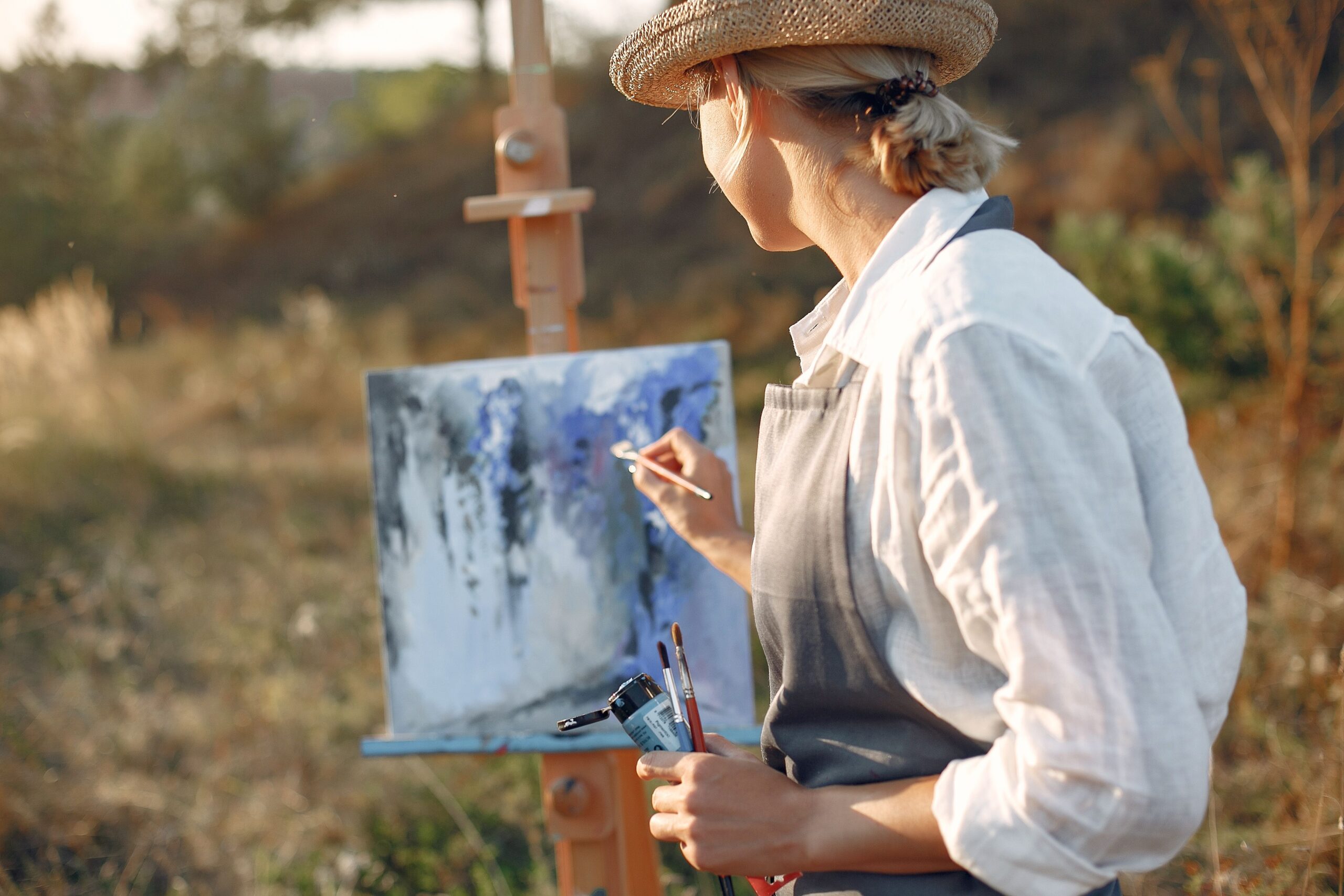
The Lost Art of Slowness: Why Your Creative Hobbies Feel Like a Second Job
Sometime over the last decade, our relationship with our personal downtime underwent a silent, corporate mutation.
If you pick up woodworking, someone asks if you are going to open an Etsy shop. If you start baking sourdough bread, you are encouraged to document the process on a dedicated social media handle. If you pick up oil painting, knitting, gardening, or pottery, the immediate, cultural reaction is to ask: How are you going to monetize this?
In modern lifestyle culture, we have completely commodified our creative expression. We have been conditioned to believe that any activity that doesn’t generate income, metrics, content, or an optimized final result is a waste of time.
As a result, our hobbies have quietly transformed into a second job. We find ourselves tracking our progress on analytics apps, rushing through the creative process to post the end result online, and experiencing an intense performance anxiety over things that were supposed to bring us peace.
When your creative escapes become optimized, they stop being restorative. They just become another source of burnout.
To heal our relationship with creativity, we must reclaim The Lost Art of Slowness—the deliberate practice of engaging in an analog hobby purely for the sake of the process, completely divorced from the pressure of an audience or a profit margin. Here is the psychology of creative decompression and how to use Soft Resonant to build a boundary around your creative play.
The Danger of the “Side-Hustle” Mindset
When you take a personal hobby and introduce the metrics of optimization—deadlines, follower counts, aesthetic perfection, or financial return—you completely alter the neural chemistry of your brain.
Psychologists separate motivation into two distinct categories: intrinsic motivation (doing an activity for the internal satisfaction of the act itself) and extrinsic motivation (doing an activity to earn an external reward or avoid an external punishment).
When you create art, cook a meal, or build a physical object purely because you enjoy the tactical sensation of it, your brain releases a steady, healthy stream of dopamine and serotonin. This lowers your baseline heart rate, calms your amygdala, and places your mind into a deeply restorative state of organic focus.
However, the moment you begin tracking the outcome—worrying about whether the final painting looks “good enough” to share, or whether your craft can be sold—the brain flips a structural switch.
The activity shifts from a restorative, intrinsic play room into an extrinsic task matrix. Your brain treats it like an unpaid internship. The pressure to produce an optimized outcome spikes your cortisol levels, introducing the exact same performance anxiety you experience during your high-stakes professional obligations. You are no longer decompressing; you are simply working for a different boss: the algorithm.
Reclaiming the Sacred Space of the “Process”
To experience true psychological restoration, you must deliberately build an environment where failure is allowed, optimization is banned, and the final outcome is entirely irrelevant. You need to fall back in love with the raw friction of the material—the smell of the oil paint, the texture of the yarn, the weight of the raw clay, or the rhythmic chop of a kitchen knife.
This philosophy is why the Relax Page inside Soft Resonant is designed with zero performance metrics.
Most digital platforms are built to hold you accountable, tracking your metrics and reminding you of your streaks. Soft Resonant’s Relax interface is engineered to do the exact opposite: to serve as a silent, non-intrusive sensory backdrop that anchors you in the physical room, helping you unplug from the digital rush.
The Analog Creator Protocol
The next time you sit down to paint, sketch, build, or cook, use your digital workspace to isolate your physical environment from the ambient rush of the outside world. Run this clean setup routine:
1. Close the Output Channels
Move your phone entirely out of sight and turn off all notifications. Agree with yourself before you begin: No photos will be taken of this session. No updates will be shared. This process belongs entirely to me.
2. Launch the Sunset Ambiance
Open your Soft Resonant shell and shift it directly over to the Relax Dashboard. Allow the rich, unshifting twilight gradient to fill your screen.
Unlike standard video streaming sites that bombard your periphery with sidebar recommendations, view counts, and distracting comments, this minimalist UI interface acts as a visual dampener, inviting your eyes to settle into a soft, restful focal state.
3. Engage an Infinite Soundscape
Put on a pair of comfortable speakers or headphones and launch an un-timed, looping acoustic track from the Relax library.
These low-frequency, lyric-free tracks—sourced from private, local-first databases like Pixabay—are intentionally selected to lack sudden changes in tempo or volume. The audio operates as a predictable acoustic curtain, masking household noise and quiet anxieties, leaving you completely alone with your physical materials.
4. Throw Away the Clock
Do not set a countdown timer. Let the track loop indefinitely. Allow yourself to work on your craft until your hands or your mind naturally tell you it is time to stop. Focus entirely on how the charcoal feels on the paper or how the wood behaves under the chisel, rather than counting down the minutes.
Creativity is Not a Metric
You do not owe the world an optimized portfolio of your personal downtime. You do not need to justify your creative interests by turning them into an enterprise, a side-hustle, or a curated social grid.
Your mind requires unmonitored spaces to play, make mistakes, and build messy things simply because it feels good to create.
Step away from the cloud databases, dim the high-contrast lights, and let Soft Resonant build an invisible wall around your offline sanctuary. Give yourself permission to slow down, drop the burden of perfection, and remember the profound joy of building something purely for yourself.