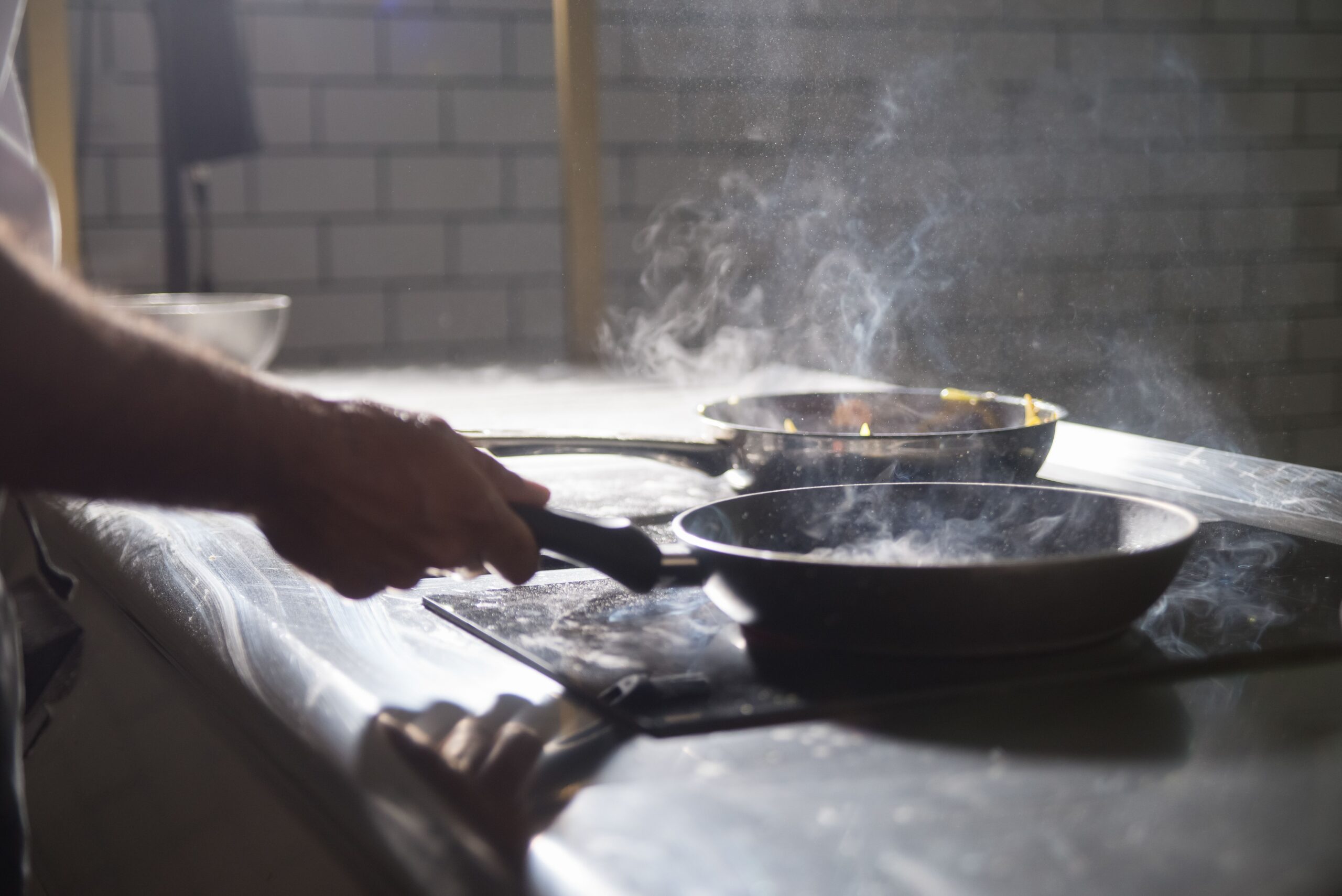
Kitchen Sanctuary: How to Use Sensorial Grounding to Disconnect After a Chaotic Day
When you step into the kitchen at the end of a demanding, high-velocity day, it is incredibly easy to treat meal preparation as just another stressful box to check.
You stand at the counter while your mind is still racing with unfinished tasks, social obligations, or unread messages. You frantically pull ingredients from the refrigerator, rush through the process, and treat cooking as an inconvenient chore standing between you and your evening rest.
But for generations, the kitchen has held a completely different role in human culture: it was designed to be a profound psychological refuge.
The act of preparing food is one of the few remaining daily rituals that is completely, un-digitally physical. It is a highly sensory environment that requires you to interact with real, tangible materials—the temperature of a pan, the smell of fresh herbs, the weight of a knife, and the shifting texture of a simmering sauce.
If you change your approach, the kitchen can become your most powerful tool for mental recovery. The secret lies in a psychological practice known as Sensorial Grounding. By anchoring your attention entirely within your immediate physical senses, you can completely shut down looping mental anxieties and transform a daily chore into a deeply restorative meditation block.
The Cognitive Power of “Hands-On” Grounding
To understand why cooking can heal a tired mind, you have to look at how your brain prioritizes focus.
When you spend your day juggling abstract problems, digital interfaces, and social dynamics, your brain is operating heavily in its Default Mode Network (DMN). The DMN is the neural pathway responsible for mind-wandering, over-analyzing past events, and worrying about future scenarios. When you are mentally exhausted but your mind won’t stop racing, your DMN is running in a hyper-active loop.
To break that loop, you must force your brain to switch over to its Task-Positive Network (TPN). The TPN activates when you engage in concrete, real-time physical execution.
Sensorial Grounding leverages this biology by flooding your TPN with tactile, immediate data. When you focus entirely on the precise geometry of dicing an onion, the exact moment oil begins to shimmer in a pan, or the changing aroma of a spice blend, your prefrontal cortex simply runs out of bandwidth to keep worrying about your digital life.
The abstract loops drop away because your brain is entirely occupied by the physical reality of the present moment.
Moving Beyond Digital Noise
The reason most people fail to find peace in the kitchen is that they bring the digital noise with them. They prop up a phone next to the cutting board to scroll through short-form videos, or they put on a high-stakes news podcast while they cook.
By adding high-density digital inputs to your cooking routine, you completely override the grounding potential of the space. Your brain stays trapped in a reactive, hyper-stimulated state, and the cooking simply becomes a background distraction.
The future of everyday decompression is Sensory Curation.
Instead of turning the kitchen into another place for passive consumption, you want to use technology to isolate the space, building an acoustic and visual perimeter that allows your mind to safely settle into the physical task.
The Countertop Sanctuary Protocol
The next time you prepare to cook a meal, treat the process as a sacred transition window. Before you wash a single vegetable or turn on a burner, run this quick sensory optimization routine:
1. Deploy the Kitchen Shield
Clear a small, safe zone on your countertop away from water and direct heat. Place a tablet or laptop there and launch a single tab running the Breathe or Calm Videos dashboard inside Soft Resonant. Turn your smartphone completely to silent and place it in another room.
2. Lock in Continuous Ambiance
Select a steady, low-frequency soundscape from the Soft Resonant library. Sourced from flat, open databases like Pixabay, these tracks avoid sudden changes in tempo, vocals, or volume spikes.
By filling your kitchen with a continuous, predictable acoustic layer, you build an immediate auditory boundary. It masks the sudden, jarring noises of the household—like a loud refrigerator hum, ticking clocks, or external street traffic—allowing your auditory cortex to completely drop its guard.
3. Anchor Your Peripheral View
Allow the minimalist visual loop on the dashboard to rest in your peripheral vision. Because our visual animations rely on slow, organic, repeating rhythms with zero sudden cuts or text pop-ups, they satisfy your brain’s natural reflex to scan the room for movement without ever demanding active attention. It turns your screen into a beautiful, steady visual anchor that stabilizes the room.
4. Practice Sensorial Execution
As you begin to cook, consciously bring your attention back to your senses every time your mind tries to drift back to a workday problem:
- Touch: Feel the temperature of the water as you wash vegetables. Notice the resistance of the ingredients beneath your knife.
- Sound: Listen intently to the shifting pitch of the sizzle in the pan—it tells you exactly when the water has evaporated and the browning process has begun.
- Scent: Take a deep breath when you add garlic or spices to the fat, using the aroma as a hard mental reset button.
Reclaim Your Daily Rituals
You have to eat every single day. You can either spend that time rushing through a chore while your mind slowly burns through its remaining energy, or you can turn that window into a powerful engine for cognitive recovery.
Stop letting the frantic pace of the digital world bleed into your physical life. Clear the digital clutter off your counters, step into a curated sensory space, and let Soft Resonant help you turn the simple act of cooking a meal into your ultimate daily sanctuary.